
Farkle Dice Roll
FunCraft GamesBoard
4.99.09K Reviews
- Version
- 1.1.26656
- Installs
- 1.00M
- Age Rating
- Everyone
Screenshots
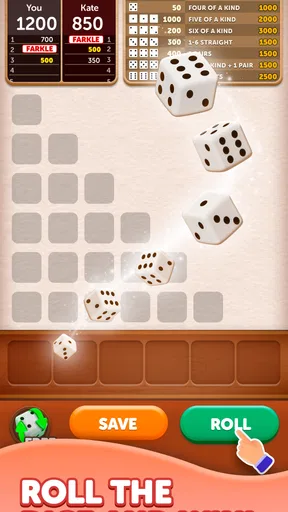

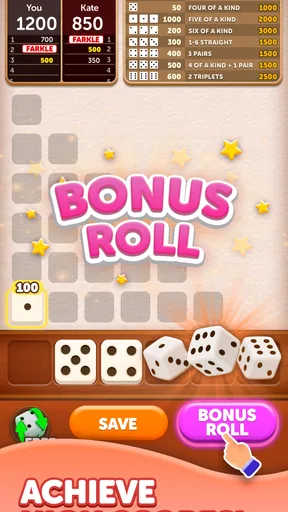

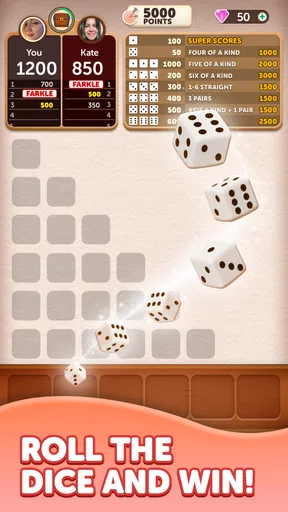



Our Review of Farkle Dice Roll
 Analysis by Appyee
When I pick up a digital dice game, I want to understand what is happening without squinting at tiny labels or hunting through layers of menus. Farkle Dice Roll makes a friendly first impression: the board-like presentation is colorful, and the basic idea is easy to grasp. That matters for a game you might open for a brief break, but it also raises a more useful question than whether the dice look inviting: does the screen stay clear when a turn gets tense and you need to choose between banking points and risking another roll?
Reading the board and finding your way around
In my experience, the straightforward layout helps newcomers get to the action without first learning a complicated interface. Farkle itself has familiar tabletop logic: roll, identify scoring dice, then decide whether to stop or press your luck. A tutorial and scoring guide can help with the rules, especially if you are playing with someone who has never tried the game. I would still take a moment to review the scoring before a competitive match; knowing the combinations is what lets you make a decision quickly rather than pausing to look things up each turn.
That small bit of preparation is useful for mixed-experience groups. One player can learn the scoring guide before everyone gathers, then explain the choices as they come up. It keeps a casual game moving and avoids turning every turn into a debate over what counts. The app’s visual simplicity is a good starting point, though anyone who needs large text, strong contrast, or a particular screen-reader behavior should check the actual display on their own device before settling in. I would not assume that a clean-looking board automatically suits every vision or reading need.
Dice sounds, touch, and pace
The rolling animation and dice sounds give each turn a tactile, table-game feel. That is enjoyable when I am playing with sound on, but the same sensory cues will not suit everyone or every place. A quiet waiting room, a shared office, or a late-night break may call for muted play; if you rely on audio cues, you may prefer a quieter environment where you can focus on the board instead. I treat the animation as atmosphere rather than information I must hear, and I recommend checking how comfortable the visual movement feels during a few turns.
Touch-based play can be convenient because it removes the need to set up physical dice, but it is not automatically easier for every motor preference. If repeated tapping is tiring or precise targets are difficult, the pace of a run of turns may become a drawback rather than a benefit. I would try a short session first and notice whether selecting dice and making the stop-or-roll choice feels comfortable. For players who enjoy the game’s decisions but find phone interaction awkward, a physical set of dice may be the kinder option.
When a phone game fits—and when it does not
This is the sort of game I can imagine using while waiting for a friend, taking a short break, or sharing a casual match with someone nearby. It does not ask me to settle in for a sprawling strategy campaign, and its turn-by-turn format makes it easy to pause mentally between decisions. Still, a phone screen changes the social feel: people may take turns passing the device, or each play on their own screen, rather than gathering around one shared set of dice. Which approach works best depends on the group and on the multiplayer options available to them.
For families or groups with different levels of familiarity, the tutorial and scoring guide offer a useful route into the game, while the familiar dice premise gives experienced players room to weigh risk. The Everyone age rating makes the intended audience broad, but it does not guarantee that every child will enjoy the competitive tension or understand the scoring without help. I would introduce the rules together and agree on a relaxed pace before treating a match as a serious contest. For people who prefer low-stakes play, solo practice may be a better first step than a leaderboard chase.
What to expect from the game and its trade-offs
Developed by FunCraft Games, this free board game has an average rating of 4.8 from around 68,000 ratings, with more than 5,000 written reviews and over a million installs. It was released on November 28, 2024, and version 1.1.24549 is listed for devices running Android 7.0 or later. Those figures suggest that it has found a sizeable audience, but they cannot tell me whether its presentation will work for your eyes, hands, or preferred pace. I would treat them as context, not a substitute for trying a few turns.
There is also a practical distinction between downloading a free game and choosing to spend inside it: in-app purchases range from $0.99 to $49.99 per item. I would decide in advance whether I am happy to play without buying anything, then avoid making a purchase just because a match has become frustrating or I want to keep up with someone else. The free entry point makes it easy to test the core experience, while the optional spending range is a reason to be deliberate, especially if a child will be using the device.
Compared with physical Farkle, the app removes the need to carry dice and makes it easier to start a solo session. A tabletop set is still better when the main goal is conversation around one shared surface, or when screen brightness and phone controls are uncomfortable. Compared with other digital board games, Farkle is appealing if you want repeated, compact decisions rather than a longer game that demands sustained planning. It is less suitable if you want a quiet, purely contemplative pastime: the luck swings and the temptation to roll again are central to its appeal.
Small choices that make a session work better
A useful habit is to separate learning the scoring from practicing risk. On an early solo session, I would focus on recognizing which dice can score and when a turn ends, rather than trying to maximize every result. Once those choices feel familiar, pay attention to how often you are tempted to continue after a decent score. The key strategic trade-off is not simply “be bold” or “play safe”; it is whether the possible gain is worth putting the points already earned at risk. Taking a moment to decide what a good stopping point means to you can make the game feel less like a string of impulsive taps.
For a casual group, agreeing beforehand on whether players are taking turns on one phone or playing separately can prevent awkward handoffs and keep the match moving. If you are introducing a new player, explain the scoring guide first, then let them make their own roll-or-bank choices rather than coaching every turn. That gives them a fair chance to learn the game’s tension. For a quick solo break, I would use a single run as a mental reset, not as a test of whether I can climb a ranking; a leaderboard can make a relaxed game feel more competitive than you intended.
Who is likely to enjoy it
I would recommend it to people who already like dice games, enjoy making decisions with incomplete information, or want an easy way to practice Farkle without setting up a table. It can also work as a low-pressure introduction for friends who are curious about the rules but do not own dice. Players who mainly want to play against friends may appreciate the social angle, although they should check that the available way to connect suits their group rather than assuming every friend is ready to join in.
I would steer away from it if you dislike luck-heavy outcomes, find repeated touch interaction uncomfortable, or need a specific accessibility feature that you have not tested on your device. It is also not my first choice for a group that wants a shared, face-to-face activity with no phones involved; physical dice do that job more naturally. For someone who likes the decisions but wants less competition, a solo session is the sensible starting point. For someone who wants deep tactical control, a strategy-heavy board game will probably feel more rewarding.
Getting Started with Farkle Dice Roll
First things first, let’s talk about getting started. Downloading Farkle Dice Roll was a breeze. Available on both Android and iOS, a quick search in the app store, and I was ready to roll—literally! As soon as you open the app, you're greeted with a user-friendly interface that’s as colorful as it is intuitive. The design is straightforward, making it easy even for beginners to jump right in without feeling overwhelmed.
The Gameplay Experience
Now, onto the real meat of the app: the gameplay. For those unfamiliar, Farkle is a traditional dice game where players roll six dice, aiming to score points based on specific combinations. The app does a stellar job of capturing this essence. The dice animations are smooth, and the sound effects give you that satisfying clickety-clack of rolling dice.
What I love about Farkle Dice Roll is how it mixes simplicity with depth. You can play solo, testing your luck and strategy against the AI, or you can challenge your friends in multiplayer mode. The multiplayer mode really shines, adding that competitive edge that can lead to hours of fun (or frustration, if you’re on a losing streak!).
Features That Stand Out
One of the standout features of this app is its customization options. You can change the look of your dice and the table, adding a personal touch to your gameplay. It’s these little things that make the game more engaging and keep players coming back for more.
The app also includes a helpful tutorial section, perfect for newbies who need a quick rundown of the rules. It’s detailed but not overwhelming, ensuring you’re ready to play in no time. Plus, there’s a scoring guide on hand, which is super handy when you’re trying to make quick decisions about whether to roll again or bank those points.
Why You’ll Love It
Let’s get into the reasons why you might fall head over heels for it. First off, it’s incredibly accessible. Whether you have five minutes to kill or you’re settling in for a longer session, the game adapts perfectly to your schedule. The quick rounds make it ideal for those short breaks during your day.
Additionally, the app’s social features are a big plus. You can connect with friends, track your scores, and even boast about your victories. The leaderboards add an extra layer of challenge, motivating you to climb the ranks and prove your Farkle prowess.
Final Thoughts
So, is it worth your time? Absolutely! It’s a delightful mix of luck and strategy, wrapped up in a user-friendly package that’s perfect for both casual and competitive players. Whether you’re a seasoned Farkle veteran or a curious newcomer, this app can provide an entertaining way to play.
If you’re ready to test your dice-rolling skills and engage in some friendly competition, give it a try. It’s a convenient way to unwind, challenge yourself, and perhaps spark some friendly rivalries. I would start with a short solo game, check that the controls and display feel comfortable, and then invite friends if the format suits you. Happy rolling!
Privacy and Permissions
See what permissions an app requests and how it handles your data.
- Photos/Media/Files
- read the contents of your USB storage
- Storage
- read the contents of your USB storage
- Wi-Fi connection information
- view Wi-Fi connections
- Other
- view network connections, full network access, control vibration, prevent device from sleeping, Google Play license check
Verdict
Strengths of Farkle Dice Roll
- Engaging multiplayer mode available.
- Simple and intuitive user interface.
- Quick game sessions for busy schedules.
- Customizable game settings enhance experience.
- Offline play supported for convenience.
Limitations of Farkle Dice Roll
- In-app ads can be intrusive.
- Limited customization for dice aesthetics.
- Occasional lag in multiplayer mode.
- No tutorial for new players.
- Requires internet for certain features.
Other Releases by FunCraft Games
View All


Similar Picks in This Category
View All
Ludo King®
Gametion4.1

Ludo
Yarsa Games4.6

Tile Master® - Matching Game
Higgs Studio3.6

Checkers Online
CC Games4.6

Dominoes
Loop Games4.7

Chess
Chess Prince4.6
Frequently Asked Questions
What is Farkle Dice Roll, and how do I play it?
Farkle Dice Roll is a classic dice game where players aim to score the highest points by rolling six dice. The objective is to reach a predetermined score before your opponents. You earn points by rolling combinations such as three-of-a-kinds, straights, and specific values like ones or fives. It's easy to learn, making it suitable for both beginners and experienced players.
Is Farkle Dice Roll available on both Android and iOS devices?
Yes, Farkle Dice Roll is available for download on both Android and iOS devices. You can find it in the Google Play Store for Android users and the Apple App Store for iOS users. Ensure your device meets the minimum system requirements for a smooth gaming experience.
Does Farkle Dice Roll offer multiplayer options?
Farkle Dice Roll provides both single-player and multiplayer modes. You can play against the computer to practice your skills or challenge friends and other players online in multiplayer mode. This flexibility allows you to enjoy the game solo or in a social setting for more fun and competitive gameplay.
Are there any in-app purchases or ads in Farkle Dice Roll?
Farkle Dice Roll is free to download and play, but it may contain in-app purchases and ads. Players can opt to buy additional features or remove ads for an enhanced gaming experience. Always check the app's description and user reviews for more details on available purchases and how they may affect gameplay.
How can I improve my skills in Farkle Dice Roll?
Improving your skills in Farkle Dice Roll involves understanding the scoring rules and developing strategies. Practice regularly to familiarize yourself with different scoring combinations. Consider watching tutorials or reading strategy guides available online to learn tips and tricks. Engaging in more games will also help you develop a better sense of risk management and decision-making.
Play our best games!


